


July 15, 1946 to January 30, 2015
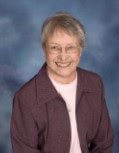
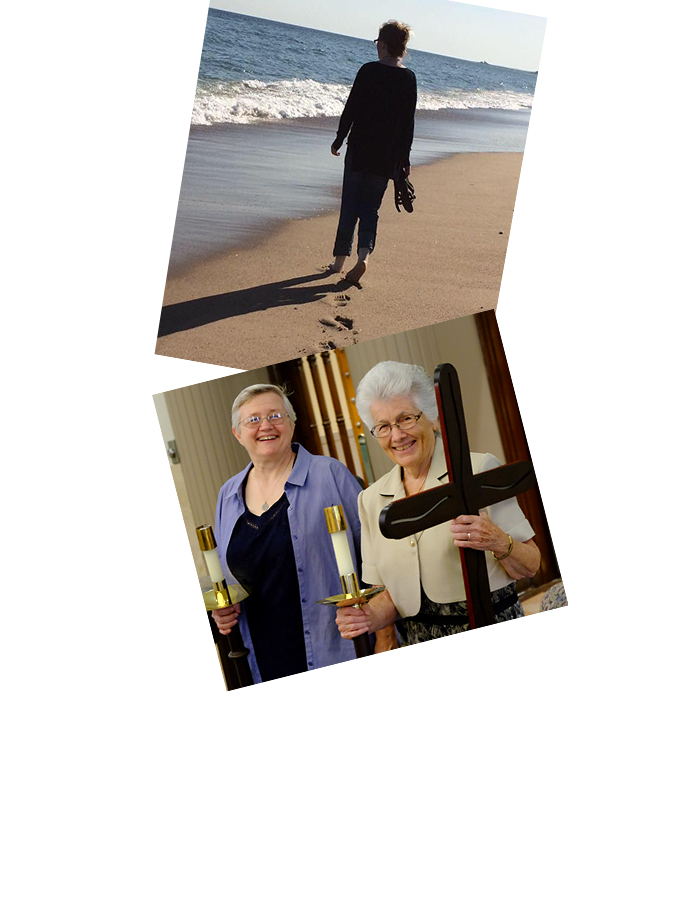
Our sister, Lucy Abbey, after being a child of God, is a child of the Ocean – and a great lover of and seeker after whales. Beginning in her youth, Lucy often roamed the rocks on the coast of New England; climbing, slithering, searching out little nooks to stuff herself into for quiet, or to read, or to pray. She promised herself a return each year to that coast and to a whale watch out on the ocean. I went with her more than once: we saw the great humpbacks breach, pound the water time after time with their fins, then disappear under water with a last flip of their flukes. Once, a tiny calf swam along beside our boat playing with us, then it dove under and came wiggling up on the other side while the mother kept watch. Lucy’s camera lens also kept watch as she ran from one side of the boat to the other. She knew and reverenced those whales and all creatures and was keenly aware of our connectedness to them in the mystery of Life; she treasured most her photographs of these elusive deep-sea travelers.
I want to share another theme that threaded through Lucy’s life. This one from The Wind in the Willows: “One day, Rat and Mole were returning to the riverbank after a long day out…when their path took them through a village.
Mole was a bit anxious, but Rat reassured him, ‘Never mind, they’re all safe indoors, …sitting round the fire, men, women, and children, dogs and cats and all.’
So they slipped by unnoticed. Once beyond the village, Rat was leading the way, so he did not notice when Mole stopped in his tracks and sniffed the air.
It was one of those mysterious fairy calls that suddenly reached him and made him tingle all over. He sniffed again – and memories came flooding back. Home!”
Lucy cried when she read or heard this passage: she longed for the smell of a home of her own.
Lucy was born in 1946, in a summer house in New London, N.H., where her mother cared for her own invalid mother. Her dad worked in secret for the United States government and soon they relocated to Northern Virginia, from where he disappeared altogether when Lucy was three. Mom, Lucy and Grandmom returned to New England where Lucy’s mother died of leukemia when Lucy was six. Her grandmother, assisted by neighbors Lucy loved, cared for her until her grandmother also died. The neighbors raised Lucy as their own until at 9, when she was removed by the court and placed with her paternal uncle’s family.
Lucy Abbey needed courage, perseverance and creativity to field a childhood with several family constellations in New England, Virginia, New England again and finally, Ardmore, Pa., where she met the IHM Sisters from West Chester.
Lucy was quiet, very curious, very close to nature and brilliant. Her high school classmates relate, “Well, they would announce second honors, then first honors, then Lucy Abbey with distinguished honors.” Even by that time, Lucy was consistently described as someone who had overcome great obstacles and emerged a generous, caring, gentle person.
At the breaking open of the Civil Rights Movement, September 1963, Lucy entered her first of two IHM communities, West Chester, Pa. She took for herself the motto, “That I may be faithful.” Lucy says her early religious life was profoundly formed by the assassinations of President John F. Kennedy and his brother Bobby Kennedy, but most deeply by the assassination of Dr. Martin Luther King, Jr. “I began to see racism as America’s original sin” she said, “and I wanted to be part of the solution, not part of the problem.”
In 19 years on mission as a West Chester IHM, Lucy taught first, fourth, seventh and eighth grades; six years of high school Spanish and six of high school religion – this in six cities, in six dioceses, each with different curricula. She always singled out the average and poor students, to help them realize their gifts and foster a strong sense of themselves.
Lucy relates that besides the Civil Rights events, she was influenced by the Second Vatican Council. “It ‘made sense’ to me for us as vowed religious to reexamine our lives and our charisms so that we could be present to people in their joys and sorrows, hopes and anxieties.” The eastern IHMs were not moving in this direction and finally Lucy made a momentous decision. “I left the Philadelphia community because my heart was divided. I could not be zealous because I felt weighted down by the struggles in the congregation…”
Lucy discerned a transfer here, to her second IHM congregation, Monroe, Mich. “I felt at home, people had the same sense of commitment. This was really in accord with how I think. This is how I want to live religious life.”
Hearkening to her determination to be “part of the solution, not part of the problem,” Lucy chose to work as social justice advocate at Groundwork for a Just World on the east side of Detroit and to live in Detroit with Sister Anne Crimmins.
16 of her years as a Monroe IHM were spent with the people of St. Suzanne’s parish, Detroit. At St. Suzanne’s, Lucy found a true partnership with Fr. Dennis Duggan, and before long with lay minister Joanie Scott. She says, “I was interested in the quality of life in the neighborhood as well as the faith inside the parish.” Lucy attended to everyone. She had the gift to meet each one where she found them. Lucy exercised unending patience. I remember week after week for years she waited in the auditorium for kids to show up for a reading program or adults for a Bible study she was starting; she rounded up materials, she handmade activities. Two people showed up – late. Two more people the next time. One the next time. Then the kids carried on. During the week someone got in and wrecked her whole set-up. Literally for years Lucy hung in where there were few signs of hope: “the kids really need this.” Today, there is a thriving set of programs, under the auspices of Don Bosco, but born of Lucy’s vision and faithfulness and networking.
Lucy was characterized by a gift for penetrating analytical analysis, while at the same time she kept 20 projects in process in the basement, many to do with children, and five more percolating in that brain of hers at any given time.
One day she had been really quiet, looking out her dining room window. She suddenly said, “I have a home there. St Suzanne’s has become my home.”
She also said, very clearly from the get-go that her goal at St. Suzanne’s was to build faith and neighborhood programs the people needed and prepare the people themselves to take over the leadership. “Then my work here will be finished,” she would say.