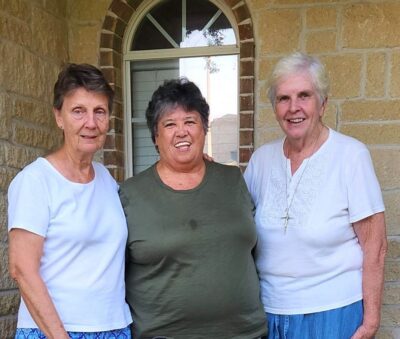
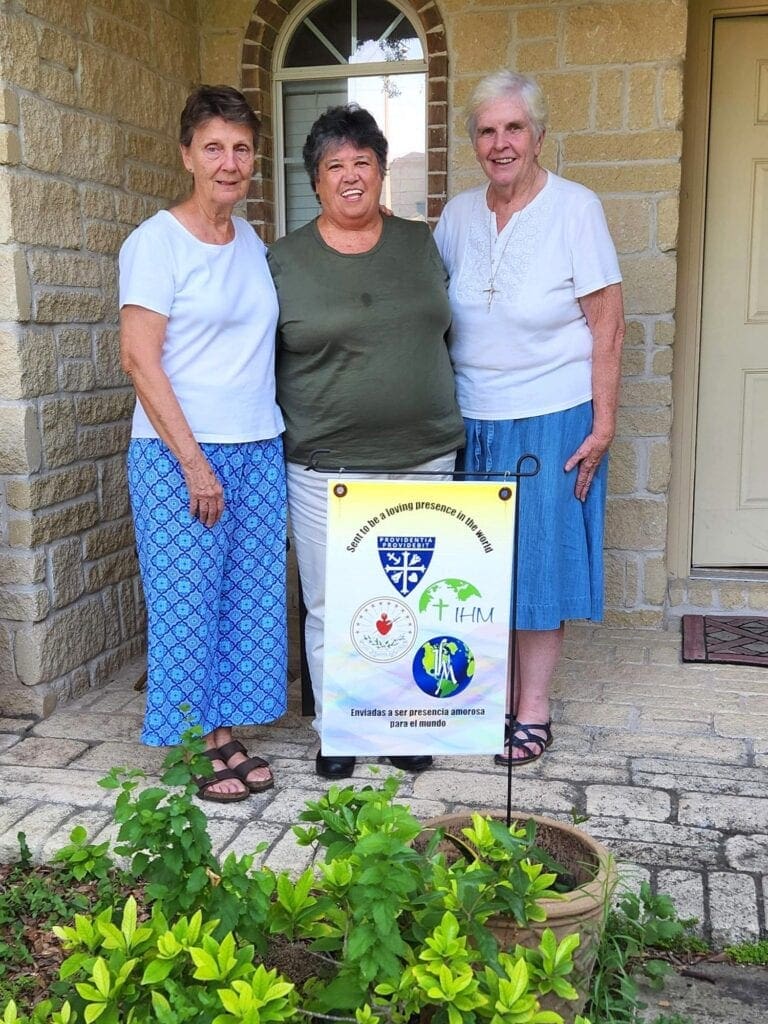
The Monroe IHM community shares a common origin with three other religious communities: the Pennsylvania-based Sisters, Servants of the Immaculate Heart of Mary of Scranton; Sisters, Servants of the Immaculate Heart of Mary in Immaculata; and the Oblate Sisters of Providence in Baltimore. Sisters from our shared communities have established a community in McAllen, Texas. Sisters Mary Elaine Anderson (Scranton), Elvia Mata Ortega (Scranton), Carmen Armenta Lara (Monroe) and Rose Patrice Kuhn (Immaculata) are the core group of sisters who live and minister in McAllen. With this creation of an inter-congregational community, our sisters can directly serve asylum seekers who need temporary respite and help to contact their sponsors in the U.S. Below are monthly updates.
December 2025
Empowering immigrant women in the Rio Grande Valley of Texas
Since Jan. 20, 2025, the situation at the U.S.-Mexico Border has changed drastically. New needs have arisen as circumstances for immigrants in the U.S. have altered. With the current government’s campaign for mass deportation of immigrants in effect, many immigrants, not only those newly arrived but also those who have lived in the U.S. for many years, are feeling fear and anxiety about their future.

Families living in the “colonias” in the Rio Grande Valley of Texas are among those who are being targeted for deportation. “Colonias” are unincorporated, low-income communities that lack basic infrastructure and services, including adequate water and sewer systems, paved roads and safe and sanitary housing. Families that already face financial difficulties are now fearful of leaving their homes to work, sending their children to school, and attending church services. Women in the “colonias” are experiencing increased anxiety and depression and are feeling powerless to ensure the safety and well-being of their children.
The Sisters of IHM Ministry Grant Fund (Monroe, MI) awarded $5,000 to Mary, Comfort of Migrants (the name of our OSP-IHM Collaborative Border Community) to address the current needs of immigrant women and their families. The project is twofold: to empower women living in rural, isolated “colonias” of western Hidalgo County and to raise awareness of their struggles and support for their dream of making a better life for their children and families. The project is being implemented in collaboration with the Missionaries of the Immaculate Heart of Mary, who founded Proyecto Desarrollo Humano (PDH) in 2004 to address the unmet needs of people living in the “colonias.”

Before Jan. 20, women from the “colonias” could earn a little money for their families by participating in PDH projects. Many of those projects, including the sewing program, have been affected by the government’s attack on immigration and the threat of deportation. PDH has a large sewing room that is now empty, where previously women gathered to sew together and spend time talking and supporting one another. Fortunately, many women have sewing machines in their homes thanks to a previous grant.
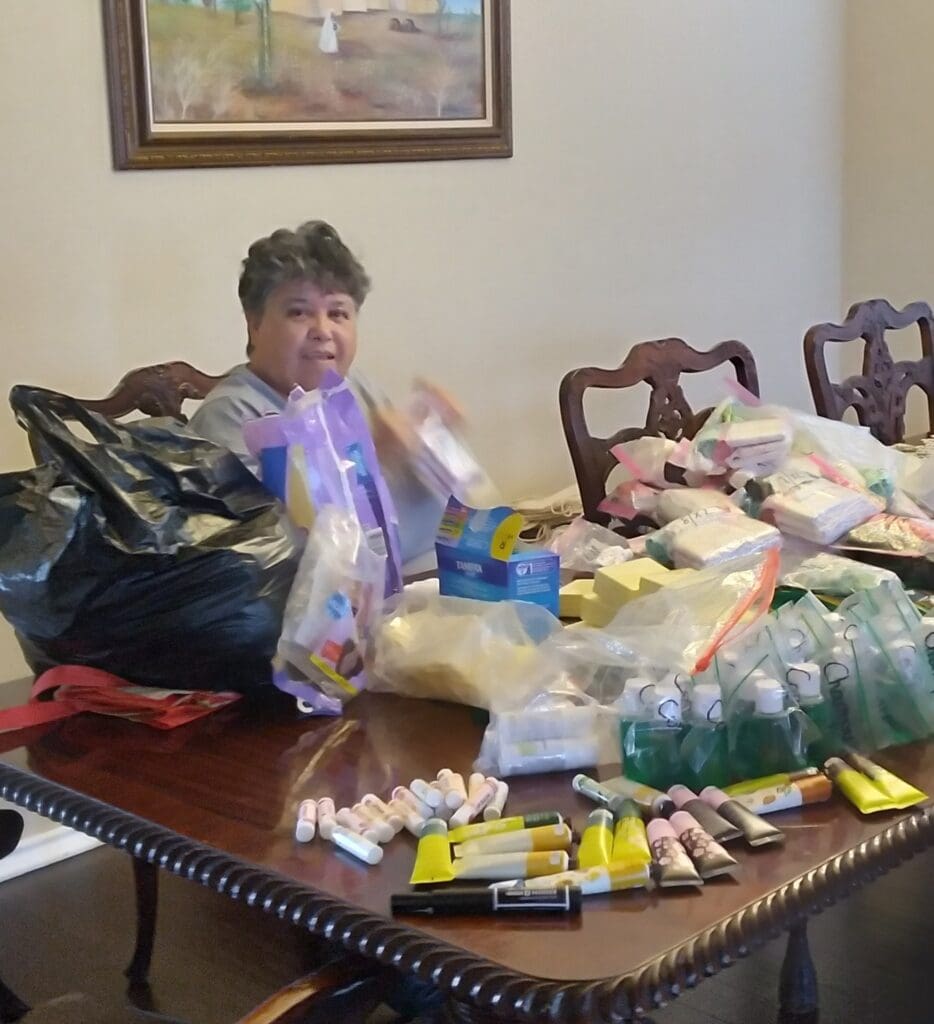
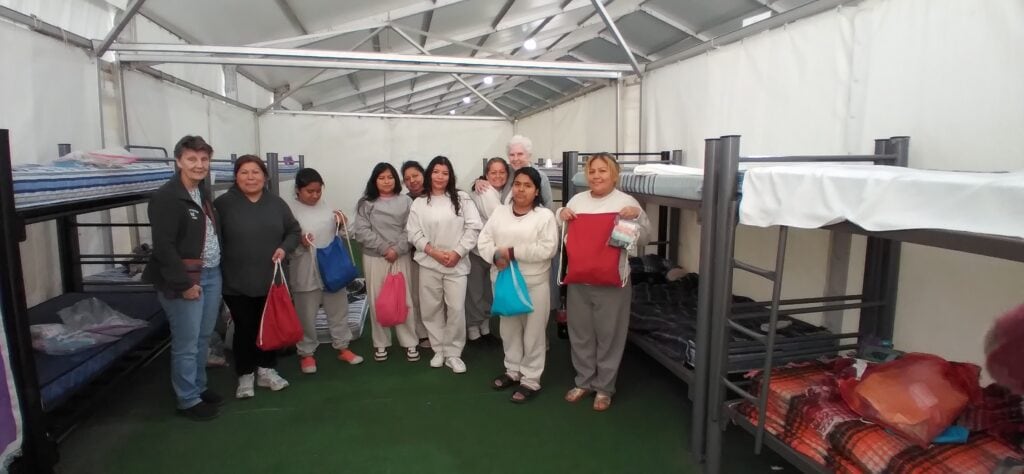
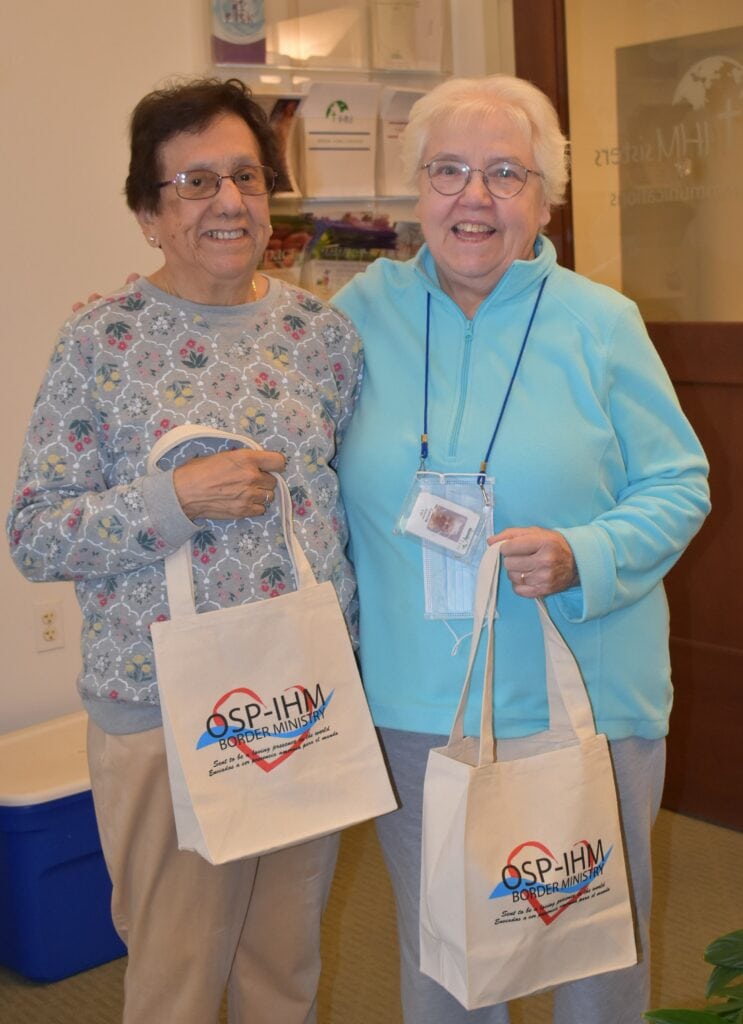
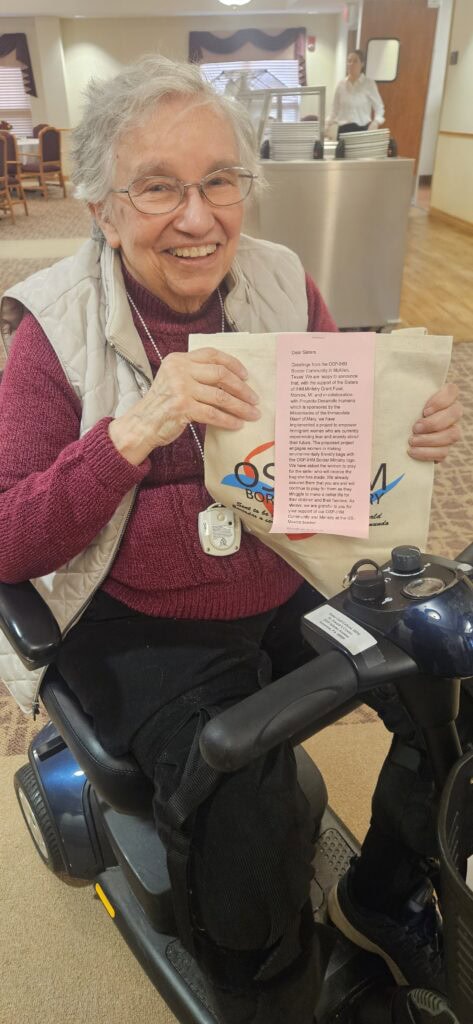
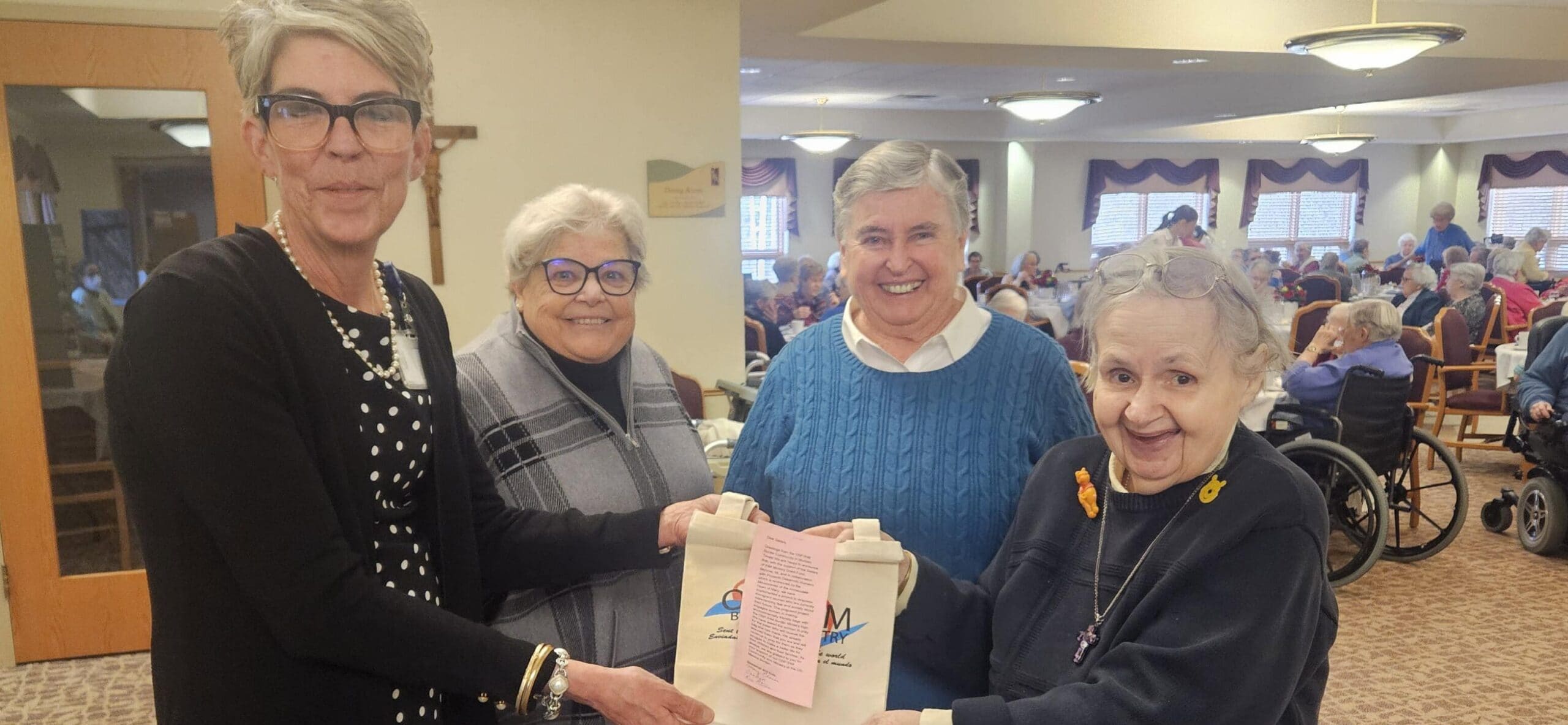
The proposed project engages women in making environmentally friendly bags with the OSP-IHM Border Ministry logo. The funds from the grant supply the materials needed to make the bags, pay the women for their work and give PDH a small stipend that can be invested in other programs that benefit families. The bags are complete, and the women are so proud of their work! Within the next few weeks, we will send the bags to the retirement communities of the three IHM congregations and the Oblate Sisters of Providence, along with an explanation of the project.
It is our hope that the sisters who receive the bags will have a better understanding of how immigrants are affected by governmental policies and will be able to support those who are marginalized through their prayers.
November 2025
Creating Trusting Relationships with Women
in the Rio Grande Valley

ARISE ADELANTE is a Mercy-sponsored organization that empowers women living in low-income communities in the Rio Grande Valley to build better lives for themselves, their families and their communities. Sister Carmen Armenta Lara (Monroe IHM) is accompanying a group of women in one of ARISE’s programs, teaching an arts-and-crafts class. The women in Sister Carmen’s class are mostly Mexican and many are undocumented.
Sister Carmen and the women have formed a trusting relationship, sharing what is happening in their lives and in their families’ lives. The activities strengthen a sense of community and foster talents and personal development. The women are delighted to learn new skills, such as embroidering on plastic canvas and making cord rosaries. Sister Carmen is also teaching them how to pray the rosary for family and community intentions.
In addition to these weekly classes, Sister Carmen has visited the homes of ARISE families to help assess and address basic necessities. Sister Carmen hopes to continue these visits in the future.


October 2025
Solidarity and Community with migrants on the U.S.-Mexico Border
by Mary Elaine Anderson, IHM

In our September communication, we explained the impact that January 20th and recent immigration legislation have had on our OSP-IHM collaborative ministry at the border. Although we continue to minister in a variety of ways to migrants on both sides of the U.S.-Mexico border, what has changed drastically in the last eight months is the number of migrants we are serving. With no way and no hope of crossing the border legally, migrants waiting in shelters and encampments in Reynosa, Mexico, are fewer. Shelters in the Rio Grande Valley of Texas have also seen a reduction in migrants who have recently crossed the border, and organizations like Catholic Charities and La Posada Providencia have adapted their services to respond to the needs of economically disadvantaged immigrants currently living in the area.

The diminishment of migrants not only has affected where we IHMs minister but also HOW we serve our brothers and sisters. Because of the smaller number, we are able to spend quality time with individuals, couples, and families who are among the most vulnerable in our society today. We are building trust and a sense of community among migrants who are unable to return to their countries of origin and have been left behind on the Mexican side of the border. We are also addressing the deeper needs—spiritual and emotional—of our migrant brothers and sisters in Texas who are living in fear of deportation.
I have been offering mental health workshops to groups of women and men at Casa del Migrante in Reynosa, Mexico, and at La Posada in San Benito, Texas. Finding Your Emotional Balance is a series of six sessions that address issues such as anxiety and depression, promoting solidarity and community building. Through art, movement and conversation, participants learn to center and ground themselves, recognize and identify ways to satisfy their personal needs, set boundaries, and discover and value their own unique gifts and talents.

At Casa del Migrante, Rose attends to the children of the workshop participants and provides a range of art activities and games that children of all ages enjoy. During the summer, there were often about 30 children, ranging from two to 13, some of whom spoke Spanish as their first language, while others spoke only Haitian Creole. In La Posada, both Carmen and Rose participated in the workshop with the adults. Their sharing about themselves and their life experiences helps the men and women to trust and also speak from their heart about their feelings, needs and desires.
Recently, a volunteer and I have begun giving parenting education classes to women at Casa del Migrante. Language has been a challenge since some of the women speak Spanish, while others speak Haitian Creole. However, the women are interested and grateful, and they tolerate the difficulties we have with the Creole language.
Rose, Carmen, and I have been blessed and give thanks for the women, men, and children who have opened their hearts to us. Together, we have formed a community that embraces diverse cultures and languages and that recognizes the uniqueness and preciousness of all God’s children.
September 2025
The border is closed! Since noon on January 20, 2025, there has been no legal way for migrants to cross.
Our OSP-IHM border ministry is not closed! Rooted in our charism of Unconditional Love and Creative Hope, we continue to accompany migrants on both sides of the border, in Texas and in Reynosa, Mexico. Through presence, prayer, and practical support, we remain committed to walking with our migrant sisters and brothers, bearing witness that compassion cannot be shut down by walls or policies.
We are blessed to minister in a variety of ways:

Migrants sold all they had and have nothing to return to.


Cuts in USAID have affected shelters in Mexico.

shelters in Mexico.
Many migrants cannot return to their country because of violence.
July 2025
God Hears the Cry of the Poor
by Sister Mary Hendrich, IHM (Immaculata)

In June 2025, Sisters Donna Shallo, Kate Ward and I, Mary Henrich, traveled to our IHM Convent in McAllen, Texas, to be present and assist at the border. Sisters Mary Elaine, Rose and Carmen were so welcoming and shared their sense of mission in accompanying people on both sides of the border. They were gracious in answering our many questions each day as we returned from our visits to Sendas 1 and 2, Casa de Migrantes and other places of ministry. They are selfless in their dedication to the people in several places.
Each time I walked over the bridge back and forth to Mexico, I prayed for all the people who had crossed the Rio Grande. Did they make it? Where are they today? Are they thriving? Are they in ICE detention? Have they been deported? So many dreams have been dashed, so many people are living in fear and uncertainty. I am heartened to see the IHMs at the border along with other women and men religious accompanying people in McAllen and Reynosa, Mexico, who want only a safe and secure place to live. They had their reasons for leaving their homelands, and so many are unable to return. They are strangers in the land. They are stranded. It is beautiful to witness them experiencing the kindness, generosity and caring support of our IHM Sisters and others.

Immigration is no longer just a word for me. These people have faces and they have names. I met migrants from Haiti, El Salvador, Mexico, Nicaragua and Venezuela. The Scriptures tell us, “The Lord hears the cry of the poor.” God is hearing their cries from their hearts with unknown futures. It was a blessing to be among them for a short time and to encounter the women and children who participated and enjoyed the activities we planned for each day. We played games, painted wooden frames, made bracelets and decorated visors. Joy and hope were visible when the sisters were there and for a little while, uncertainty and insecurity could be forgotten.
Some days, the American Jesuits would preside at Mass. It was very simple, but so meaningful. The children served around the altar and everyone joined in reverent prayer. The most touching for me was the celebration of the Corpus Christi Mass. It was followed by the best procession ever. Children dressed in white robes carrying candles, followed by children carrying bunches of flowers, walked around the buildings of Casa de Migrantes. The priests provided everything for the Mass and the procession. The faith of the women and children was palpable; we joined in and sang our hearts out. I know God is hearing the cries of the poor and, like our ancestors, we wait in hope for the coming of God in our day.

June 2025
A Collaboration of Care – Immigrant Accompaniment at the U.S.-Mexico Border
By Melanie Menkevich and Dr. Catherine E. Wilson

Between June 1-6, 2025, the Immaculate Heart of Mary sisters in McAllen, Texas, graciously hosted us to more fully understand the challenges faced by immigrants at the U.S.-Mexico border as well as the multilayered response by a range of nonprofits providing respite, services and accompaniment to those facing an uncertain future. The best way to describe what we observed firsthand in the Rio Grande Valley and in Reynosa, Mexico, was a collaborative nonprofit network of care and concern. Given that immigration is a dynamic and complex issue which touches every dimension of the human person, it was only fitting that we witnessed a loving outreach among a variety of religious orders, such as the IHM Sisters, the Jesuits, the Sisters of Mercy and the Daughters of Charity, as they meet immigrants exactly where they are – in the midst of their challenges and dreams for a better life.
This collaboration of care takes shape in various ways – from providing opportunities for worship to designing workshops in art and dance therapy, to developing activities to help pass the time, strengthen community ties and build lasting memories. We played Lotteria with families, kicked around a soccer ball with young siblings and sang songs in Spanish. We learned about the dedication to mastering the skill of weaving artistic and colorful patterns in plastic, with the goal of teaching it to women and children.

In border cities like Reynosa, other nongovernmental organizations, such as Save the Children, the United Nations and Doctors Without Borders, further extend this collaborative network by offering educational support to immigrant children and medical assistance to all immigrants in their respective situations. There was also collaboration amongst the migrants in waiting – people from different countries passing the time together, sharing child care duties, offering support and solace and joining together in prayer. Our time spent there was bittersweet; it was a beautiful experience to witness the collaborative spirit of care among religious workers and migrants, while simultaneously heartbreaking to realize the uncertainty that the migrants face.
Volunteering at this border mission embodied the true spirit of reciprocity; we’ll never forget the impressions that these people made on us. It brings a new perspective to the work being done at the IHM Center for Literacy, as many of our students have made a similar journey and arrived at their destination, only to now face the same uncertainty that they are at the border. Before visiting the border, we were informed about the changes it would undergo after being closed, with fewer people passing through; however, there is still work to be done for migrants who need a hopeful presence on both sides of the border and beyond.
Looking back on our visit, it was fitting that our visit to the U.S.-Mexico border took place at the start of Immigrant Heritage Month, a month in June dedicated to celebrating the many contributions that immigrants have made in the United States. We are grateful to the IHM Sisters for their generous hospitality in McAllen, Texas, as well as for their heartfelt dedication to immigrant accompaniment. Their work, as part of this larger nonprofit network at the border, allows the American public to recognize and advocate for the challenges faced and contributions made by immigrant communities in our midst.
Melanie Menkevich, MPA, is Executive Director of the IHM Center for Literacy in Northeast Philadelphia and Dr. Catherine Wilson is Associate Professor of Public Administration at Villanova University.
May 2025


The OSP-IHM Border Mission has been ministering to migrants for almost three years. We are grateful to the 55 sisters and associates who have volunteered with us. Nine of our sisters even returned for a second time to volunteer. We would like to thank the SOAR! Foundation that helped us establish our mission in McAllen, Texas, and during these past years has financed the airfare and food stipend of sisters 65+ who wished to volunteer for a brief time at the US-Mexico Border. Although the SOAR! grant ends in June 2025, we hope sisters and associates will continue to collaborate with us as we accompany our migrant brothers and sisters on both sides of the border.
April 2025
by Sister Mary Elaine Anderson, IHM
“How much contempt is stirred up at times towards the vulnerable, the marginalized,
and migrants! On this day, I would like all of us to hope anew and to revive
our trust in others, including those who are different than ourselves,
or who come from distant lands, bringing unfamiliar customs,
ways of life and ideas! For all of us are children of God!”
Pope Francis (Easter, April 20, 2025)

the border to cross into Mexico
In his final Easter address, Pope Francis courageously points out the antagonistic and intimidating reality that the marginalized experience in our world today. He invites us to hope and trust in all God’s children. For we IHMs, it is a call to fully embody our charism and proclaim in our everyday life God’s unconditional love for all, especially the most vulnerable among us.
Since the executive order Jan. 20, which terminated the CBP One App and left migrants with no legal way to enter the U.S., the OSP-IHM Core Community has been discerning and exploring with other men and women religious the direction our ministry at the border will take. Daily, we hear about hostile actions being taken against our migrant brothers and sisters. We are witnesses to the acute suffering of those whose dream to enter the U.S. was extinguished, the fear and the confusion of those who have been deported to countries where their life is in danger, and the uncertainty of those who live under the constant threat of being deported.
We recognize the urgency to stand in solidarity with and accompany our migrant brothers and sisters. The OSP-IHM Border Ministry is one of collaboration. Many of our OSP and IHM sisters, associates and friends have volunteered for a brief time. Our most recent volunteers were Sister Ann Berendes (Scranton IHM) and Sister Patricia Godoy (Immaculata IHM). What follows is Sister Patricia’s reflection on her time at the border.

“My two-week experience at the border has been a time of wanting to bless and of also being deeply blest in a setting where our migrant brothers and sisters are suffering. It has been a cry for us to come together to alleviate the unbearable anguish of many families who seek the safety and security each human being deserves, along with the opportunity to grow and live with dignity. They have wanted to do things “the right way,” but now the doors are tightly closed, and they experience the anguish of probable deportation, and living in a state of ‘limbo’ with nowhere to go.”
Our Sisters participating in the OSP-IHM Border Ministry, truly pilgrims of hope, creatively give their “all” to alleviate, console, accompany and encourage God’s good people. To relieve this suffering, they have joined together with religious and priests of other congregations. In these two weeks, they have worked together with Sisters of Mercy, a Franciscan sister, Sisters of the Holy Spirit and Mary Immaculate, a Daughter of Charity of St. Vincent de Paul, Jesuit priests and seminarians. With joy and hope, each person uses their unique gifts to lift up God’s People.
“From him the whole body, joined and held together by every supporting ligament, grows and builds itself up in love, as each part does its work.” Ephesians 4:16

I am also certain that our sisters everywhere, with their prayers, concern and support are a vital part of nourishing this ministry with God’s blessing and grace. For this very brief time, being a witness and participant in this endeavor, I have been profoundly blest with an even deeper longing to build up the Kingdom of God, and so I return to my sisters and ministry with this holy yearning. As I leave, I don’t LEAVE. God’s people in need are permanently “tattooed” in my heart.
February 2025
By Margaret Chapman, IHM, Marianne Gaynor, IHM, Jane Herb, IHM

Upon our arrival in McAllen, February 8, we were greeted by our sisters, Carmen, Mary Elaine, and Rose, and a strong, warm wind. We knew our volunteer experience would be different because of the order terminating the CBP-One App, canceling all border appointments for legal entry into the United States. However, the strong wind we were greeted by became a metaphor for how different ministry here at the border has become because of the shifting realities. In the spirit of all IHMs and collaboration with women and men from other religious communities, the ministry is finding new pathways to offer compassionate accompaniment to those seeking safety. Our sisters are making new paths by walking and we were privileged to walk a bit of the journey with them during our own personal journeys of renewal.

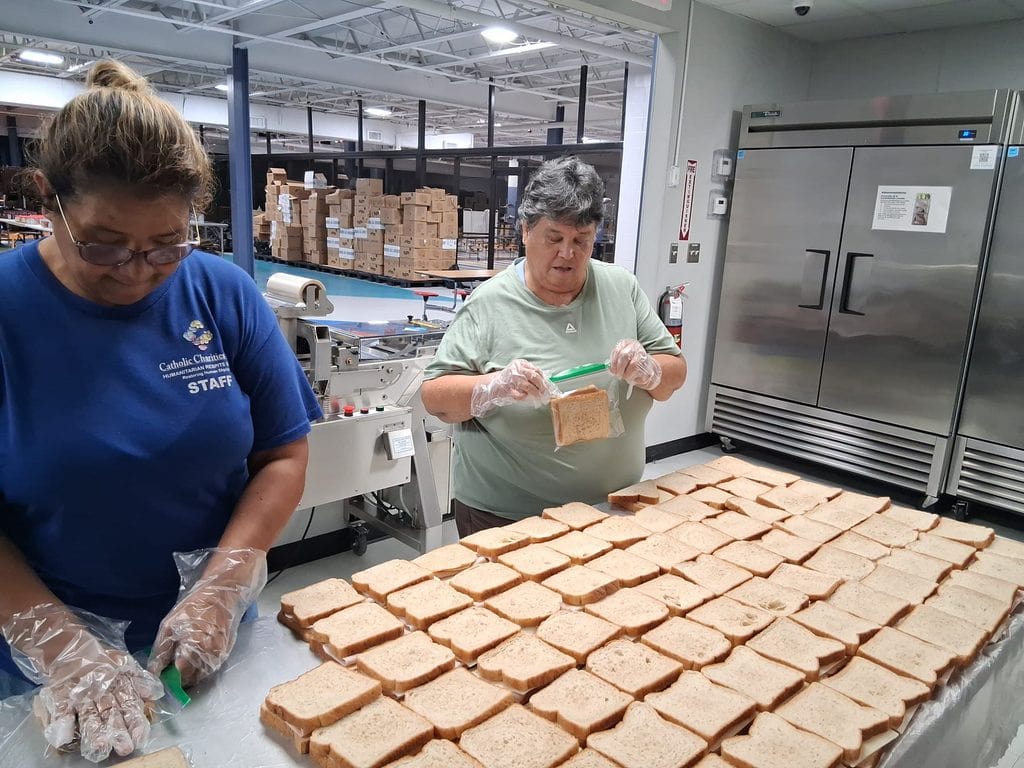
Despite the sad emptiness of the Humanitarian Respite Center in McAllen, we still found ways to assist. We prepared for the future return of migrants by organizing donated resources (clothes, medicines, children’s books, toys, etc.) so that staff and other volunteers could more easily locate needed items for distribution. You can only imagine how disorganized things can become when serving 800 people daily!
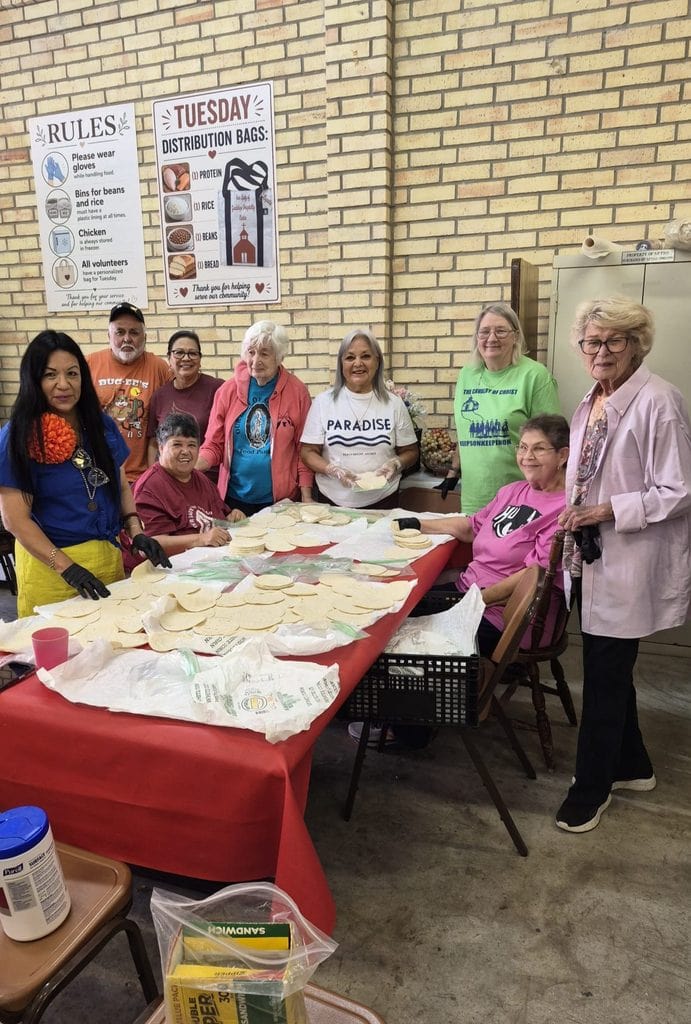
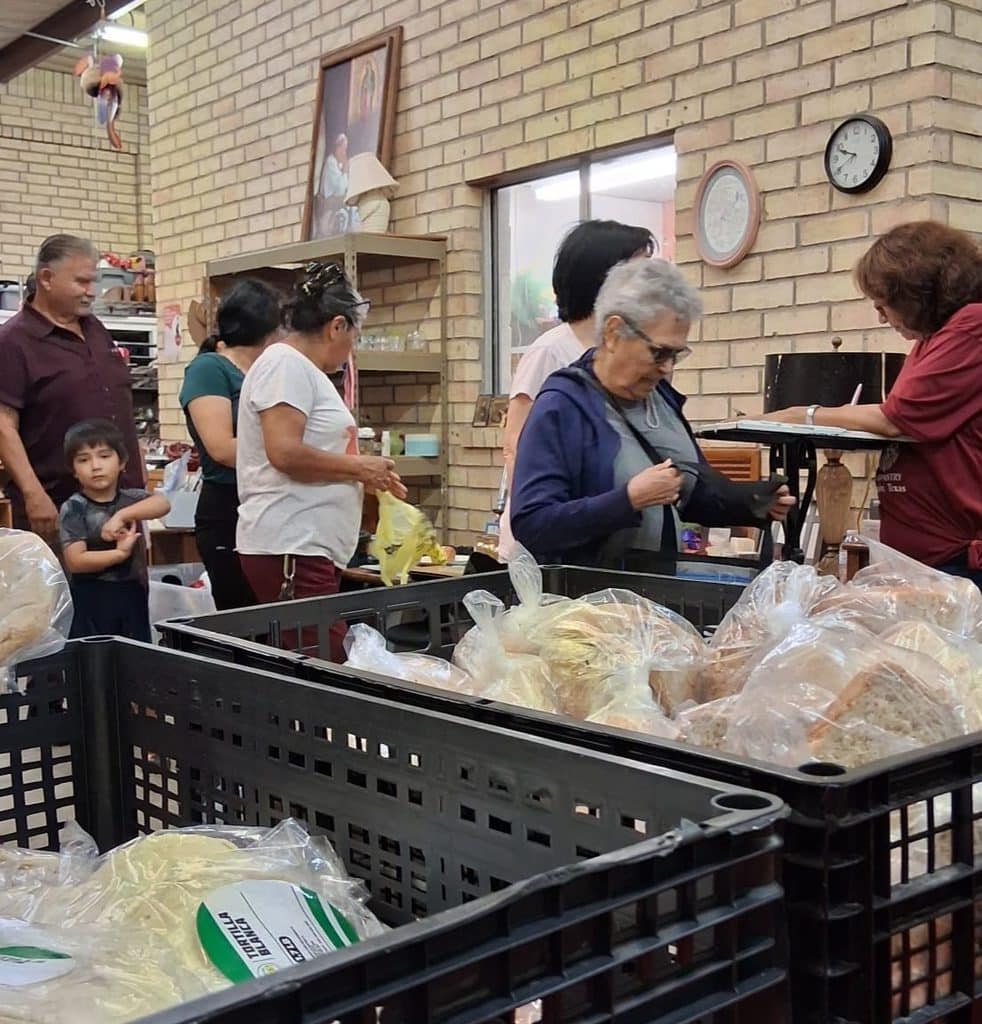
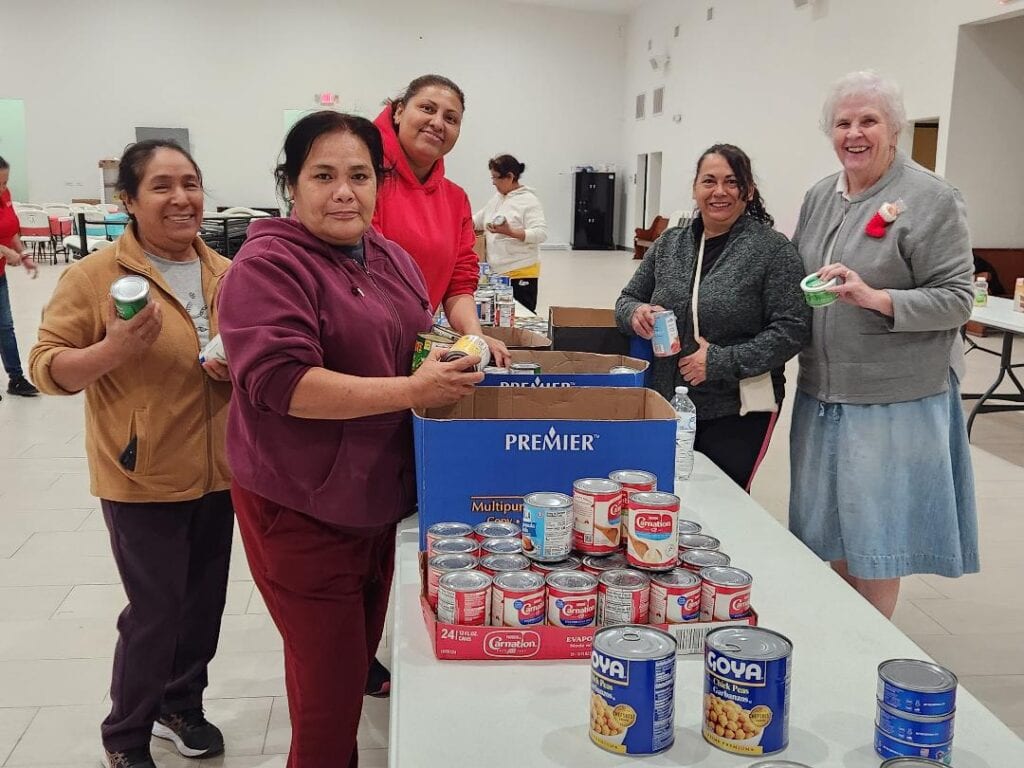
Carmen discovered the need for more volunteers at a food pantry run by parishioners from Our Lady of Guadalupe parish in Mission, Texas, the next town over from McAllen. We accompanied her each week to assist with packing and distribution. Many receiving these food packages were first —and second-generation migrants, some with documents, some without. Carmen has become a valued member of this group of volunteers, who also welcomed us.

The sisters have reconnected with a longer-term shelter, La Posada de Providencia, in San Benito, Texas. The hourlong car ride from McAllen to San Benito was worth the joy of meeting and spending time with the resident migrants and their families. These residents came into our country legally before Jan. 20 and journeyed to this shelter from other temporary shelters along the southern border. Here, they may find temporary employment, take English classes and enroll their children in school. Carmen, along with the help of our newly acquired “expertise,” in the art of needle plastic work, was able to teach the women a relaxing pastime to take their minds off their situation, if only for a few hours.

The sisters have also continued their weekly visits to Casa del Migrantes in Reynosa, Mexico. Although there are fewer migrants because of the increase in deportations, the Jesuits still provide weekly liturgies for all the residents and the sisters provide creative activities for everyone to participate in after the liturgy. The three of us have a much greater appreciation for all the work that goes into preparing those activities! They are real recreational therapists, putting smiles on the faces of both children and adults. Our community in McAllen, together with the Jesuits, contribute monthly to another shelter in Reynosa, Senda de Vida Dos, (Path of Life Two). Pastor Miguel and his wife, Angela, who oversee the shelter, use this money to buy supplies at Sam’s Club for the residents. One of us was able to accompany Sister Rose, Pastor Miguel and Angela on their February shopping trip.

While the outreach ministries have had to shift, the ministry of community and companioning one another as sisters has not changed. Their ministry of hospitality was deeply felt and appreciated by each of us. They are willing to share stories they have heard from the migrants in Spanish, with those of us not fluent in Spanish. Hearing these stories from our women who have heard them firsthand has been a real gift. Their commitment to collaborate with the other sisters and priests in the area is stronger than ever. The ministry of prayer is always evident, even standing on the bank of the Rio Grande each week praying not only for the safety of those migrants making the dangerous crossing but also for the Border Patrol officers that they may do their job with respect and compassion.
It has been said that it may not be possible to change the direction of the wind, but we can learn to adjust our sails! As our sisters here continue adjusting their sails, may all of us, sisters, associates and friends of the OSP and IHM congregations pray with and for them as they respond to God’s call to minister to the most vulnerable at the U.S.- Mexico border.


January 2025
What are we seeing? What does it mean? … What now?
By Mary Elaine Anderson, IHM, Carmen Armenta Lara, IHM, Rose Patrice Kuhn, IHM
Since Jan. 20, we have received emails, texts, and phone calls from many, asking us, “What are you seeing at the border?” Here in McAllen, Texas, we are seeing fewer migrants at the Humanitarian Respite Center (HRC). During the year 2024, sometimes there were 50-120 migrants in HRC on any given day (a sharp decrease from the 800 persons that were assisted daily by Catholic Charities in Fall 2023). In the past week, each day that we visited HRC there were about 10-15 migrants.

Migrante, Reynosa, Mexico
There are probably some who would see the decrease in numbers as a victory … a halting of “illegal” migrants … a sign that the government is keeping “criminals” from entering the U.S. at our southern border. However, those of us who live at the border and volunteer at the Humanitarian Respite Center understand the decrease in numbers and its implications for migrants in a very different way.
The decrease in migrants at HRC is largely due to the executive order that terminated the CBP-One app. Since Jan. 2023, the app functioned as the legal way for migrants to submit advance information and schedule appointments at eight southern border points of entry. The process often involved a long wait (9-12 months), but it allowed migrants to enter the U.S. legally and to apply for a work permit as well as asylum (protection from violence, poverty or persecution). The executive order Jan. 20, which terminated the CBP One App and canceled existing appointments at the border, has left migrants with no legal way to enter the U.S.
When we visited the Casa del Migrante in Reynosa, Mexico, Thursday, Jan. 23, we found migrants, especially those who had appointments and were scheduled to cross the border that day or week, in shock, confused about their options and unsure of their future. Many of those remaining in Mexico cannot return to their countries of origin because of the threats and the violence that they and/or their families suffered. They are asking themselves, one another and us: “What now?” That day, we did what we usually do on any other Thursday in the Casa del Migrante. We listened to heartbreaking stories and allowed our own hearts to break open. We celebrated the Eucharist … the breaking of bread among families from many different countries … united by their faith in God. After communion, several Haitian women stood up and sang with full hearts and one voice, “How Great Thou Art.” Their strength in the face of so many adversities, past and present, will stay with us as we, too, navigate the current situation at the border.
As the days pass, we begin to explore what direction our ministry at the border will take. Will we be spending more time in Reynosa, Mexico, where migrants, with no legal option for entering the U.S., need accompaniment? Will the Casa del Migrante, where we have been spending every Thursday, become a sanctuary for deportees to Mexico instead of the safe space it was for migrants waiting to receive an interview with Immigration to enter the U.S.? Will the decreased numbers at HRC allow us to meet the needs of migrants in a more personal way?
What is God’s invitation to us now? Just like our migrant brothers and sisters, we will wait, discern our next steps, and move forward with faith in God’s unconditional love for all, especially the most vulnerable and the marginalized. We ask you, sisters, associates and friends of the OSP and IHM congregations to pray with and for us as we respond to God’s call at the U.S.-Mexico border.
* 2023 border updates
*2024 border updates
For the past several years, these four communities have made a commitment to reconnect
and envision a common future. Read more about their shared ministries.